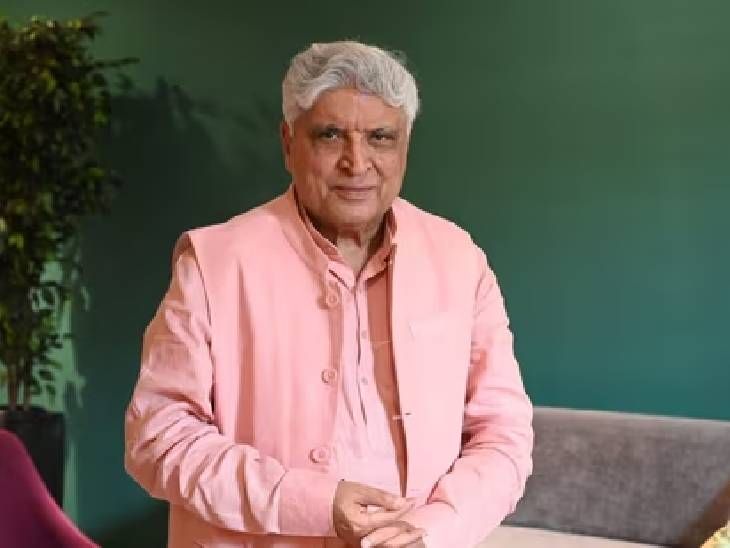
The most important thing in any profession and especially in the field of writing and art is integrity. More than talent because talent can get you recognition, but real identity comes from how honest you are with your work and yourself. Integrity doesn’t just mean telling the truth, it also means leaving no gap between your beliefs and your behavior. What you say to others, apply the same to yourself – this is integrity. It means being true to ideas, sensibilities, creativity and expression. The artist’s first duty is not to give the people what they want to hear; His first duty is to say what he believes to be true. Man may have his limitations, weaknesses, he may also make mistakes; But if he has honesty then he will recognize his mistakes and learn from them. Perfection is an illusion, but honesty is what keeps you alive and relevant. Integrity does not mean stubbornness, but loyalty to the truth. Humility and self-examination are also part of it. When I first heard the story of the film ‘Lagaan’, I thought that this film might not work. Later the same film was counted among the important films in the history of Indian cinema. I had no hesitation in admitting that my opinion was wrong. Intellectual honesty also includes the courage to admit one’s mistakes. A man who is not ready to admit his mistake cannot reach the truth. Even today, I never have the illusion that I am more worthy than the rest of the people in the world. Having false illusions about oneself is also a form of dishonesty. Another meaning of honesty in art is loyalty to one’s beliefs and cultural identity. Sometimes I feel sad to see that some filmmakers are becoming disconnected from society, culture and cultural heritage. It seems as if they are beginning to hesitate with their own traditions. I think the first responsibility of an artist is to be true to his/her own truth. To distance myself from my roots just to appear more modern or international seems to me to be against artistic integrity. I have always felt that great cinema has no nationality, it has its own truth. You look at Akira Kurosawa, Ingmar Bergman, Federico Fellini, or Satyajit Ray. The language, culture and environment of all these films are different, but they have one thing in common – unwavering honesty towards their experience and their vision. This is the honesty I see in Satyajit Ray’s films. He never resorted to artificial sentimentality to impress the audience. His characters come from life and appear before us just like life. It is interesting that the more honestly they remained local, the more global they became. And most importantly, they had complete confidence in their cultural identity. He showed the soil of Bengal, its people and the world with complete truth. While working on the script in the seventies, Salim Sahab and I always tried not to be dishonest with the story. Integrity is not just a personal quality; It is also a question of institutional and professional ethics. We did not make Vijay a saint in ‘Deewar’, because he was not. In ‘Shakti’ we did not declare any one character completely right and the other completely wrong, because life is not so simple. In ‘Zanjeer’ we deliberately kept the narrative tight. In that era, there was pressure to add extra songs, humor and romance in every film, but if every scene is written only to please the audience, then the backbone of the story breaks. For me, whether the film is good or bad is a separate debate. The real question is whether the filmmaker himself has confidence in the film he has made. I believe that every artist should do only that work on which both his heart and mind agree. The moment of choice between popularity and truth is the real test of an artist. You may achieve success by choosing the easy path, but if the price of that success is your creative honesty then that deal is very expensive. And the biggest dishonesty happens when you start creating something in which you do not have your own faith. Great art and cinema should honestly express its time, society and experience, not be created simply to please audiences. Cinema ultimately emerges from society and reflects the sentiments of society. This is the reason why Kurosawa’s film made in Japan touches us in India too, and Rai’s film made in Bengal feels personal even to the viewers sitting on the other side of the world. There is no conflict between being local and being universal. Only a local story told truthfully ultimately becomes universal. The reason for the success of South Indian cinema has also been attributed to its connection with its cultural roots. In my opinion, the real integrity of an artist lies in his staying connected to his soil and believing in his truth. An artist who runs away from his identity is often unable to even reach the world. But the voice of one who stands by his truth is heard far beyond borders and languages. Today’s problem is not that our filmmakers watch international cinema. The problem arises when they start copying instead of learning from him. Gaining influence is one thing, losing your identity is another. I believe that keep the windows of the world open, but do not uproot the foundation of your house. If you try to please everyone all the time, you will eventually end up being dishonest with yourself. If everything is said just to get applause, it is no longer intellectual honesty. The value of a person is not determined by his success but by his credibility. You may make mistakes, your opinion may be wrong, your work may sometimes be weak. But if you are honest in your work, words and conscience, people will trust you even if they do not agree with you. (Editing and coordination- Arvind Mandloi)
Source link
Your worth is determined not by applause, but by credibility: He who is not ready to admit his mistake cannot reach the truth.

Byayoobkk2022@gmail.com
Jun 28, 2026