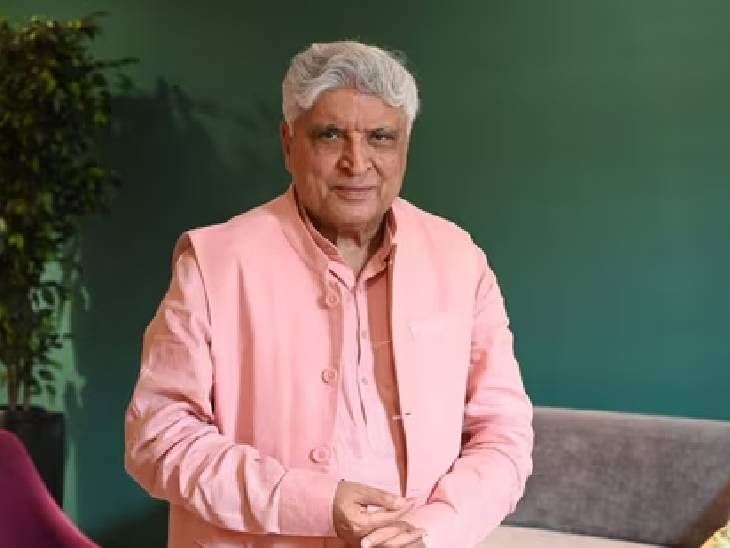
Man has probably never progressed as much in his entire history as he has in the last hundred-two hundred years. He measured the depths of the ocean, touched the heights of the sky, stepped on the moon and sent his vehicles to planets billions of kilometers away. He understood the structure of the atom, read the human genome and created machines that can both learn and take decisions. But amid all these achievements, one question still stands before us – has our thinking progressed as much as our technology? This is where the biggest contradiction of the twenty-first century is visible. Our minds are modern, but a part of our mental world still holds on to age-old beliefs. It seems that two different worlds exist within the same person. There is a world of laboratory, where everything is based on calculation, experiment and proof. The other world is that of traditions, symbols and beliefs that we have inherited. Just consider this irony. A scientist, with the help of years of hard work, mathematics, physics and thousands of experiments, takes the spacecraft to the exact place where it has been determined to reach, on a planet or satellite millions of kilometers away. If the success of rockets depends on science, calculations and natural laws, then where does the need for any other supernatural system come from? And if that supernatural system is decisive, then what is the meaning of such long preparation and such rigorous tests of science? Before the 21st century, it never happened that your knowledge and your faith were opposed to each other and both were within you. Perhaps this is the biggest intellectual contradiction of our times – our knowledge stands in one direction and our faith in the other. Both live within the same person, but never question each other. To understand religions one has to look at them in their historical context. He was born in an era when man did not have a scientific explanation of nature. Why lightning flashes, why earthquakes occur, how epidemics spread, why eclipses occur, how rains occur – he did not have answers to these questions. Therefore he searched for answers based on his understanding, imagination and experience. Those answers were also natural according to their time. But the biggest quality of knowledge is that it does not remain stagnant. Every new discovery forces us to rethink old assumptions. Therefore, it is equally natural for our understanding to change with time. The problem arises when we want to take full advantage of the science of the twenty-first century, but hesitate to adopt the most basic habit of the same science – examining every claim on the basis of questions, logic and evidence. Then our life gets divided into two parts. We have modern technology at our disposal, but a part of our thinking still clings to medieval notions. Technology can make us modern, but modern mentality can only give us scientific vision. If only religion could make humans virtuous and moral, the Middle East would be the most peaceful region in the world today. But the reality is completely opposite. No civilization survives merely because it has preserved its past. She moves forward because she respects her past and has the courage to ask questions about it. Heritage does not mean carrying it on the head, but understanding it, examining it and seeing it in a new light in every era. The concepts which stand the test of logic, experience and evidence do not require any insistence to save them; They survive on their own. But to accept an idea as true just because it is centuries old is not to respect the past, it is to be burdened by it. The identity of a civilization is not that it repeats everything that its ancestors said, but that it adds its own wisdom to their heritage. I am an atheist myself. I have no religious beliefs. But that doesn’t mean I have any objection to the faith of others. Objection occurs when private beliefs begin to supersede public judgments. The real challenge of modern society is not to create a war between science and faith. The challenge is to clearly understand the boundaries of both. Belief is an individual’s personal right, but where knowledge, education, medicine, law or public policy is concerned, decisions should be based not on faith but on evidence, logic and testing. Faith can support personal life, but only conscience and knowledge work to move the society forward. My understanding of spirituality is also similar. If spirituality means looking within oneself, taking stock of one’s life and recognizing one’s weaknesses and strengths, then what objection can anyone have to this? And if spirituality means rising above the walls of religion, caste, race and creed and loving all humanity, then I have no objection to that either. I just don’t call it spirituality, I call it humanity. In today’s times, spirituality has become a kind of tranquilizer for the rich. This comment is not on spirituality, but on its commercialization. This is the reason why the difference between today’s so-called Guru and Buddha is clearly visible. Gautam Buddha left the palace and went to the forest in search of truth. Many of today’s gurus come out of the jungle and reach palaces. (Editing and coordination- Arvind Mandloi)
Source link
Lahar-Lahar: Our mind is modern, but our thinking is based on age-old beliefs.

Byayoobkk2022@gmail.com
Jul 19, 2026