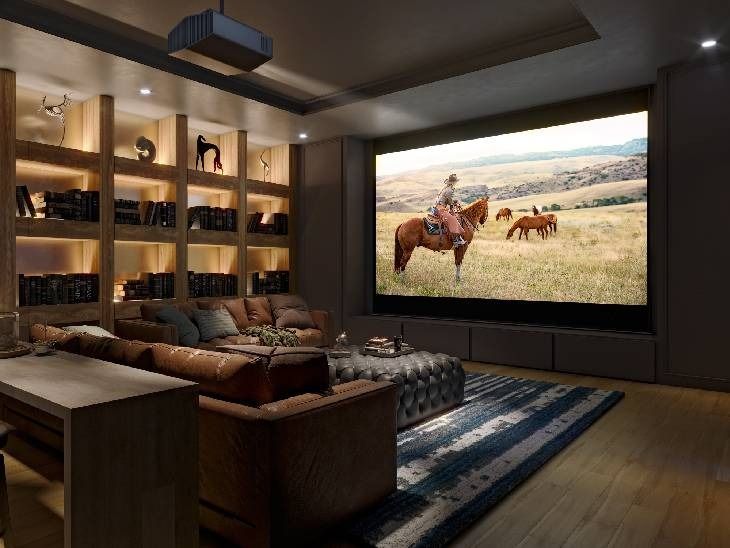
The coming times are of interactive, customized and immersive cinema. The audience will not just watch the film, but will also feel it. Imagine a scene in a theater has a desert background. You want to see it in the snowy valleys of Ladakh. The scene will change when you press the button on the remote control. You can rotate the scene 360 degrees and view it from any angle. If there are 40 spectators in the theatre, everyone will be able to watch the film from the angle of their choice. Like the huge virtual world Oasis, shown in the Hollywood film Real Player One, released 8 years ago, the audience will be able to feel touch, vibration, heat, cold, wind and distance. For this one will have to wear body suit, gloves and VR headset. This is different from the 4D cinemas available now, where seats shake, water splashes or smells. Immersive cinema will feature virtual action effects that incorporate every aspect of AVGC XR (animation, visual effects, gaming, comics and extended reality). The Indian Institute of Creative Technology (IICT), located at the NFDC campus in Mumbai, has state-of-the-art labs and studios for every aspect of AVGC XR. CEO Ninad Raikar says that after deemed university status, specialized UG-PG courses like animation, gaming will start. Currently there are 19 diploma-certificate courses. The institute has partnered 24 institutes including Netflix, Google, Microsoft, Apple, Meta for curriculum, research and innovation. By 2030, this industry will need 20 lakh professionals. By 2030, this industry will need 20 lakh professionals. The blueprint for AVGC Content Creation Lab will soon be ready to make students skilled in areas like animation and visual effects in 15 thousand schools and 500 colleges announced in the budget for Orange Economy. After developing a model IICT, the government plans to establish IICTs at different places in the country on the lines of IITs and IIMs. 60% of Hollywood films are processed in India – Salil Deshpande Faculty, IICT India also has labs for AVGC XR sector. Parts of 60% of Hollywood films and 10% of the world’s films have their AVGC XR jobs backend work done in India. Filmmakers like Rajamouli use Annapurna Lab of Hyderabad. Currently in India, the work of rotation, rotoscoping, matchmove, tracking, cleanup, paint, crowd simulation, lighting support is done. India works on the backend. About 80 lakh people are connected. But, India does not have ownership rights on the concept design i.e. story, characters, creative control, intellectual property (IP). The benefit of increasing stake in the Orange Economy will be in moving from the backend to the frontfoot. Today, IICT has the capacity to produce 40-50 percent of films like Avatar. Currently IICT is also incubating 10 startups.
Source link
Now is the era of customized cinema: The scene of the snowy area in the desert will change at the press of a button, Creative Technology Institute on the lines of IIM-IIT; Creators of animation and visual effects will be ready

Byayoobkk2022@gmail.com
Mar 3, 2026