2 hours agoAuthor: Virendra Mishra
- copy link
On the 54th death anniversary of Meena Kumari, those painful and unheard aspects of her life are remembered again, which make her not only a great actress but also an example of struggle.
As bright as Meena Kumari’s life appeared on the screen, it was equally full of pain and struggle in reality. His story, which started with his father leaving him on the steps of an orphanage as soon as he was born, forced him to become the support of his family at the age of just four years. Later, despite earning name in the film world, his personal life remained full of troubles.
He left an indelible mark on the hearts of the audience with his brilliant acting in films like ‘Baiju Bawra’, ‘Sahib Bibi Aur Ghulam’ and ‘Pakeezah’. But behind this brightness of the screen, his life was surrounded by pain, loneliness and broken relationships. The bitterness in his relationship with Kamal Amrohi and incidents like slapping by his assistant deepened his inner pain. This pain was reflected in her acting and made her a tragedy queen.
He died on 31 March 1972 at the age of just 38, but his acting and poetry are still alive. His life exemplifies that true art is often born out of deep pain and experiences.
Today is the 54th death anniversary of Meena Kumari, let us know some more special stories related to the life of the tragedy queen of Hindi cinema.
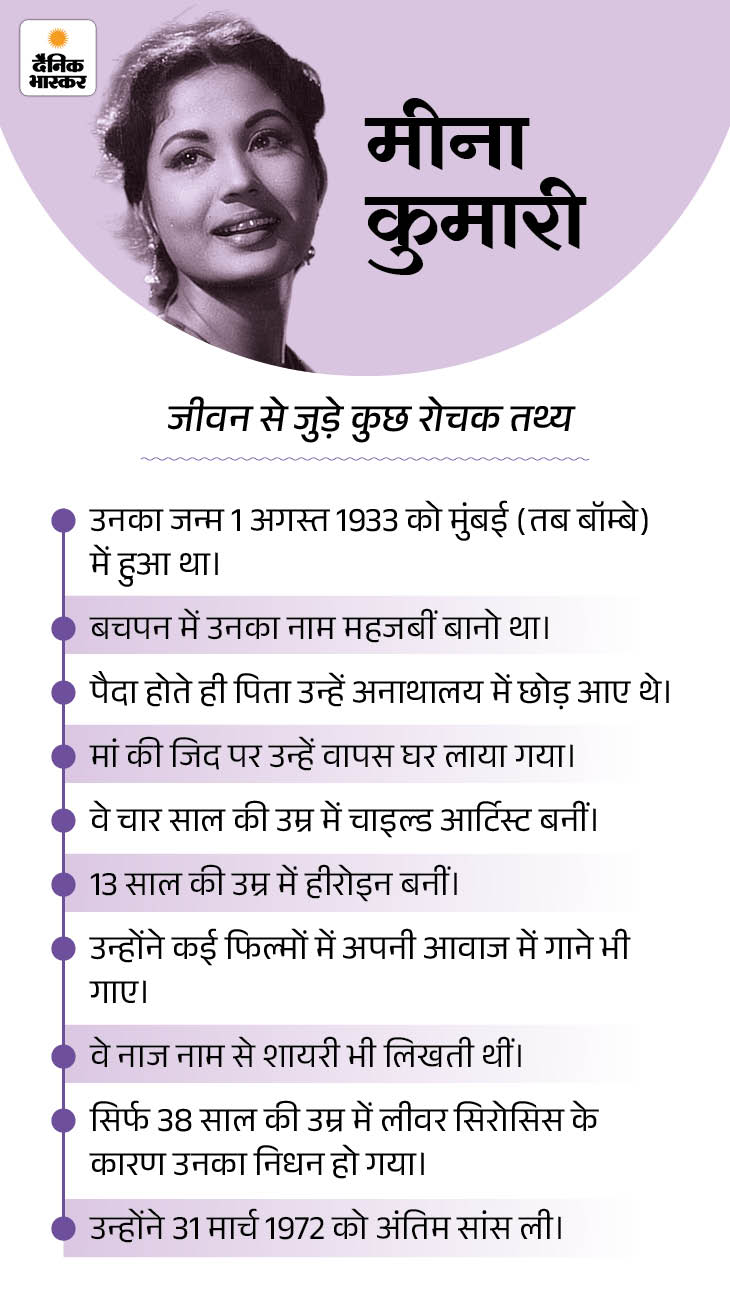
Father left him in an orphanage as soon as he was born
Meena Kumari was born on 1 August 1933 in Mumbai (then Bombay). Her childhood name was Mahjabeen Bano. His birth was a disappointment to his father Ali Baksh as he wanted a son. Meena Kumari was the second daughter in the family, she had two sisters.
elder sister Khurshid Jr. and younger sister Mahalika (Madhu), who was the wife of child actor and actor Mehmood. When Mahjabeen was born, her father did not have money to pay the doctor’s fees, and left her on the steps of the orphanage, but after some time he now regretted it and brought his daughter back.
Relationship with Tagore family
Meena Kumari’s father, Master Ali Baksh, was a Sunni Muslim from Bhera (now Pakistan), who was a theater artist, harmonium player and Urdu poet. His mother, Iqbal Begum (original name Prabhavati Devi), was from Meerut, Uttar Pradesh and belonged to a Bengali family. He converted to Islam after marriage.
Meen Kumari’s maternal grandmother, Hem Sundari Tagore, was the daughter of Rabindranath Tagore’s distant cousin. After the death of her husband, she went to Meerut to take up nursing and married Pyare Lal Shakir Meerthi, from whom Prabhavati, mother of Meena Kumari, was born.
Became the support of the family at the age of four
Meena Kumari had no special interest in film career. She wanted to study since childhood, but the condition of the house was so bad that at the age of four she had to work in films to support the family. His parents started taking him to film studios for shooting.
He got admission in a regular school, but due to work commitments, his studies were interrupted. He completed his education mainly through private tuition and self-study.
Started career as a child artist
Director Vijay Bhatt cast Meena Kumari as a child artiste in the film ‘Leatherface’ (1939). This is where her film journey started with the name Baby Mehjabeen. He was paid Rs 25 on the first day. At a very young age, she became the main source of income for the Baksh family.
In an interview given to Filmfare in 1962, Meena Kumari had told that she got immense satisfaction from being the support of her parents since the age of four.
Baby Meena born from Baby Mehjabeen
As a child artist, Meena Kumari worked in many films like Adhuri Kahani (1939), Pooja (1940), Ek Hi Bhool (1940), Nai Roshni (1941), Vijay (1942), Lal Haveli (1944). She would sometimes become so emotional on the set that she would cry, but as soon as the camera was on, her acting would come out with the strength of her inner pain.
This true sensitivity and depth made him different from other artists. During the shooting of the film ‘Ek Hi Bhool Ki’, director Vijay Bhatt changed the name of Meena Kumari from Baby Mehjabeen to Baby Meena. Later this name became famous as Meena Kumari.
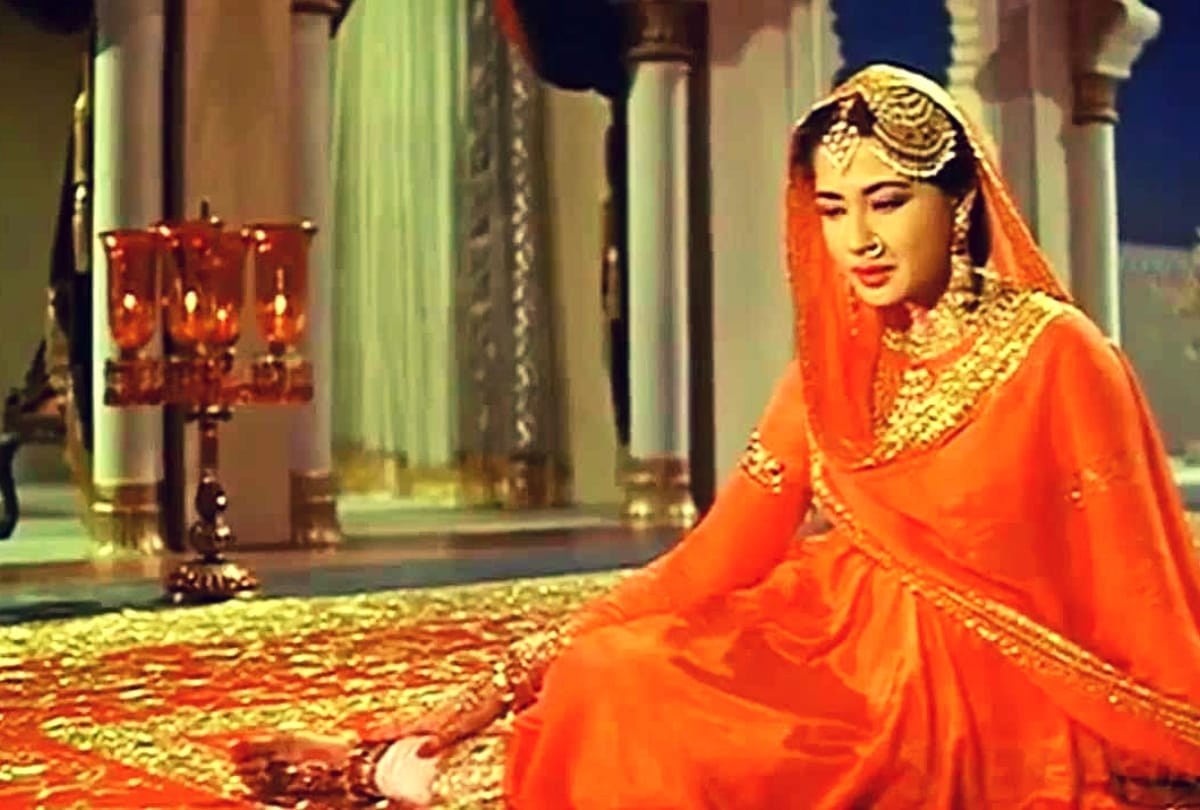
Became a heroine at the age of 13
At the age of 13, she became a heroine in the film ‘Bachchon Ka Khel’ released on 2 May 1946 and from Baby Meena she became Meena Kumari. Meena Kumari made her mark with Baiju Bawra (1952). In this, her character Gauri fell into the hearts of people and the film ran for 100 weeks.
For this she received her first Filmfare Best Actress Award. After this, films like ‘Daira’ and ‘Parineeta’ gave her acting more recognition. In ‘Parineeta’ she effectively showed the difficulties of the common life of an Indian woman.
Got the title of Tragedy Queen from the film ‘Sharda’
Between 1954-56, Meena Kumari worked in films based on social and historical stories, in which films like ‘Chandni Chowk’, ‘Ek Hi Raasta’, ‘Adl-e-Jahangir’, ‘Halaku’, and ‘Azad’ were prominent. Her film ‘Azad’ with Dilip Kumar became very popular among the audience.
In 1957, the film Sharda made Meena Kumari a tragedy queen. For his courage and acting he won the first Bengal Film Journalists Association Award. Subsequent films like ‘Sahara’, ‘Jewish’, ‘Farishta’, ‘Chirag Kahaan Roshni Kahaan’, brought him continuous success.
Her performance in ‘Sahib Bibi Aur Ghulam’ (1962) won her four Filmfare Awards and also became India’s Oscar entry. After this he worked in memorable films like ‘Preet Parai’, ‘Kohinoor’, ‘Bhabhi Ki Chudiyan’, ‘Phool Aur Patthar’. His last releases in 1972 were ‘Gomti Ke Kinare’ and ‘Pakeezah’. His performance in ‘Pakeezah’ also earned him a posthumous Filmfare nomination.
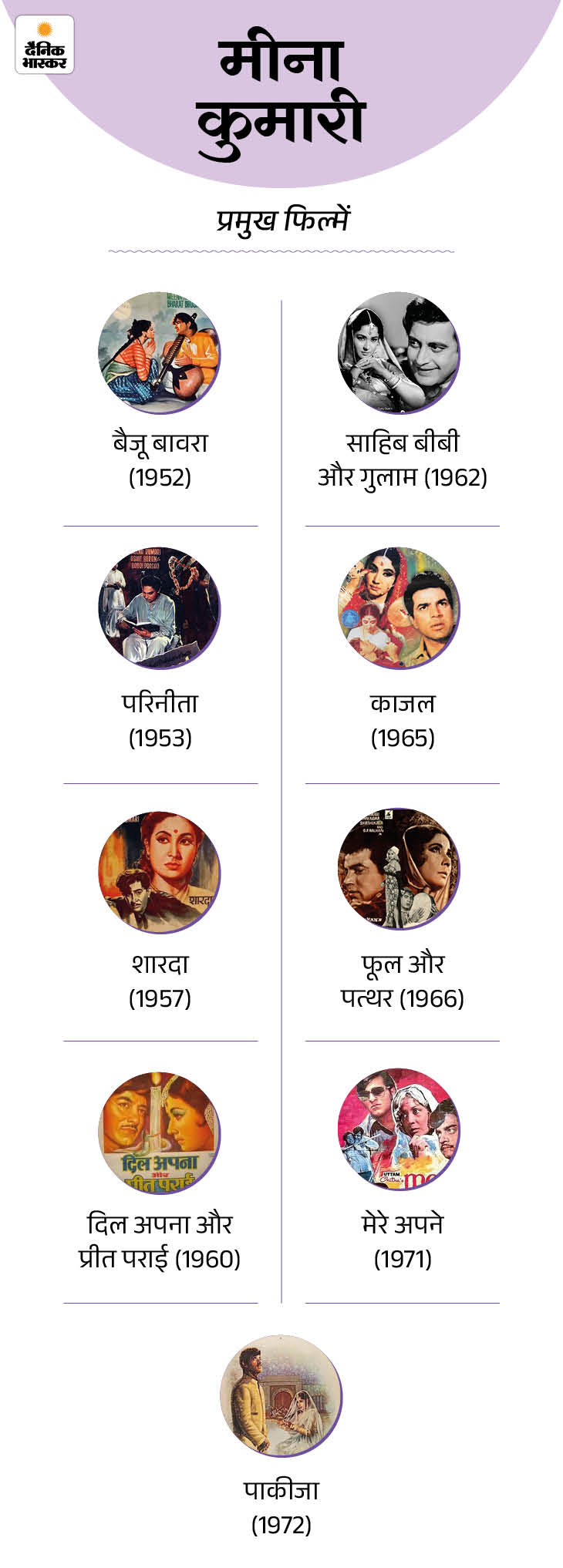
Not only an actress, she was also an excellent playback singer.
Meena Kumari was not only an actress but also an excellent playback singer. In his childhood, he gave his voice as a child artist in films like ‘Bahan’ till 1945. Later, after becoming a heroine, she also lent her voice to songs like ‘Duniya Ek Sarai’ (1946), ‘Piya Ghar Aaja’ (1948), ‘Bichhade Balam’ (1948) and ‘Pinjre Ke Panchhi’ (1966).
Not only this, he also sang for ‘Pakeezah’, although that song was not used in the film and was later released in the album ‘Pakeezah – Rang Ba Rang’ (1977).
First meeting with Kamal Amrohi
As great as Meena Kumari’s career was, her life was equally affected by her struggle. This chapter of his life started when Kamal Amrohi entered his life.
In 1951, 18-year-old Meena Kumari met famous director Kamal Amrohi on the sets of the film ‘Tamasha’. After the success of ‘Mahal’, Kamal was looking for a heroine for his next film ‘Anarkali’. Seeing Meena’s acting, he convinced her to play the lead role.
Injured in road accident, became close to Kamal Amrohi
On 21 May 1951, Meena Kumari became the victim of a road accident near Mahabaleshwar. Due to this, her left hand got permanently injured and she was admitted to Sassoon Hospital for two months. The very next day after the accident, Kamal Amrohi came to inquire about the well being of Meena.
Meena Kumari was sad about not being able to work in ‘Anarkali’. Kamal took charge of the situation by writing ‘Meri’ on her hand next to the film and the closeness between the two grew.
Married without telling father
On 14 February 1952, 19-year-old Meena Kumari married 34-year-old Kamal Amrohi in the presence of her family and friends. His father was not aware of this marriage. In fact, on 14 February 1952, Meena Kumari’s father Ali Baksh left her and her sister Madhu to the physiotherapy clinic. As soon as his father left, Kamal Amrohi reached the clinic with his friends and married Meena Kumari.
Father started pressurizing for divorce
Meena came to her home after the marriage. After this, both the husband and wife started talking all night long, which one day a servant overheard. Which one day a servant overheard. After this the father started pressurizing Meena to divorce Kamal.
Meena decided that she would not live with Kamal until she gave two lakh rupees to her father. Father gave Meena’s dates to filmmaker Mehboob Khan for his film ‘Amar’, but Meena wanted to work in her husband Kamal Amrohi’s film ‘Daira’ instead of ‘Amar’.
On this, the father warned that if she went to work in her husband’s film, the doors of the house would be closed for her forever. After five days of shooting for Amar, Meena left the film and went to shoot for ‘Daira’. That night her father did not allow her to come into the house and Meena was forced to go to her husband’s house. The next day, the news of this marriage, which was hidden for one and a half years, made a lot of headlines in the newspapers.
Kamal set conditions after marriage
Kamal allowed Meena to continue her film career, but kept the condition that she would not invite any man to her make-up room. She would only call her makeup artist and return home in her car by 6:30 every evening. He also had control and monitoring on the set. Meena Kumari initially agreed, but gradually did not follow these conditions.
Kamal Amrohi did not attend Meena’s programs.
Kamal Amrohi often did not accompany Meena to programs and functions. In 1963 ‘Sahib Bibi Aur Ghulam’ was selected as the Indian entry at the Berlin Film Festival. The then Information and Broadcasting Minister Satya Narayan Sinha arranged for two tickets.
One for Meena and the other for her husband, but Kamal Amrohi refused to travel. Meena went alone to the premiere.
Meena Kumari faced physical abuse in her marriage. According to author Vinod Mehta, six different sources confirmed that Meena was the actual victim. Nargis also mentioned his pain in her letter.
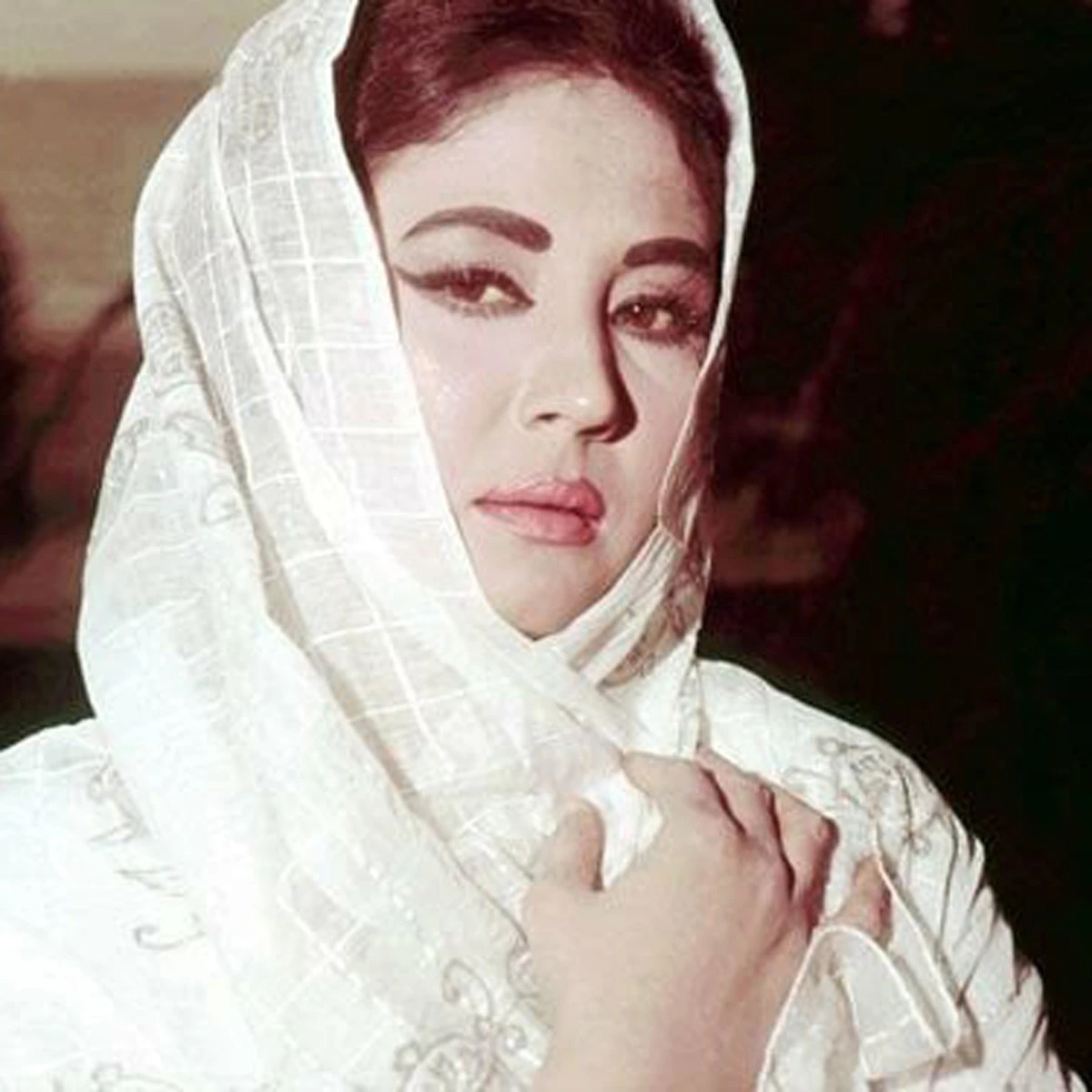
Nargis had written a letter in Urdu for Meena Kumari in a magazine named Shama in 1972. This letter is now a part of the book “Yeh Un Dinon Ki Baat Hai, Urdu Memoirs of Cinema Legends”.
Kamal Amrohi’s assistant slapped
Kamaal’s assistant Bakar Ali slaps Meena when she lets Gulzar enter the make-up room. Actually, Meena Kumari used to write poetry under the name ‘Naz’ and shared her emotions with Gulzar. In the same connection, Gulzar had gone to meet Meena Kumari. However, Kamal did not intervene directly, which further increased Meena’s anger. She got angry and went to sister Madhu’s house.
Kamal tried to get them back, but Meena refused to talk to him. This incident completely broke the already strained relationship.
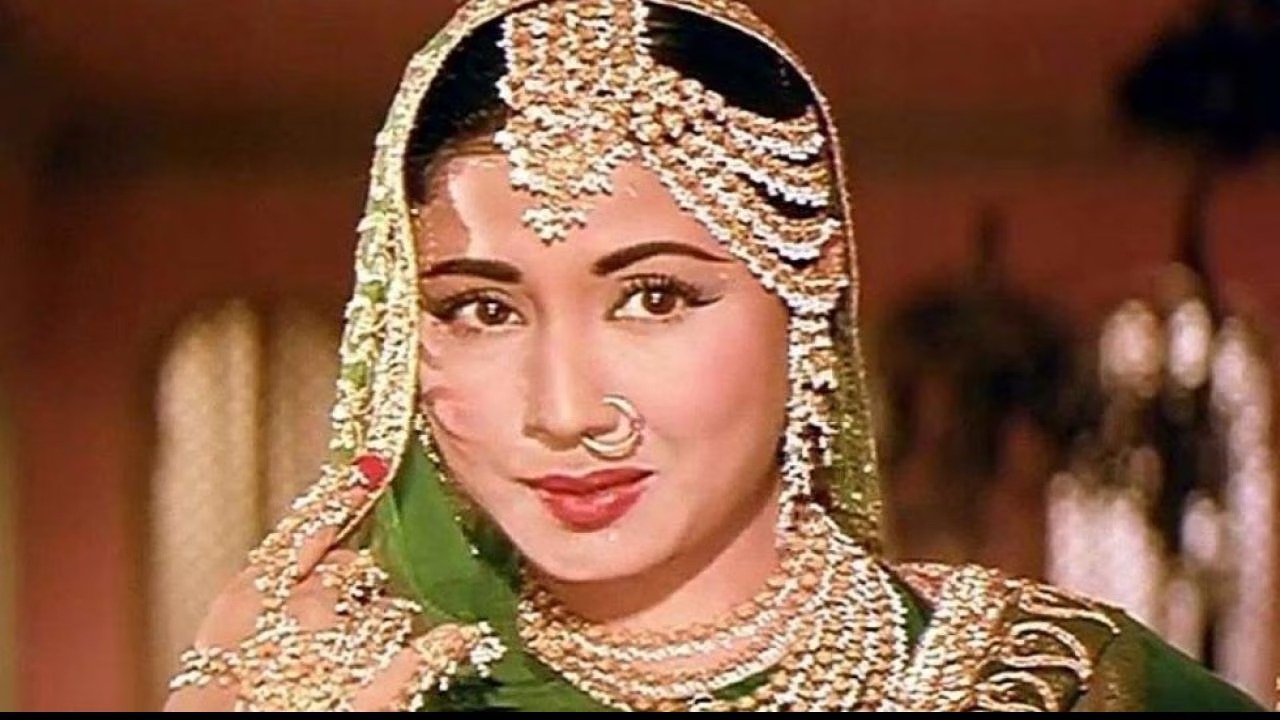
Meena Kumari was not just a film actress, she was also a conscious poet. He wrote poetry under the name ‘Naz’, which reflected his inner pain, loneliness, longing for love and the pain of life.
After separation, Meena Kumari often faced loneliness, despair and pain. Many people believe that this loneliness later led them to alcoholism, which took a toll on their health. His health deteriorated significantly over time, and there are speculations that isolation and personal conflict broke him from within. He started resorting to alcohol, but this started worsening his condition.
When her last film Pakeezah was finally released on 4 February 1972, it was directed by her husband Kamal Amrohi. It took 14 years to complete this film. He did not live to see its consequences. She fell ill on March 28, 1972, and died of liver cirrhosis on March 31, 1972, at the age of only 38.
As his last wish, he himself wrote these lines on his coffin:
“She ended life with a broken fiddle, with a broken song, with a broken heart, but not a single regret.”
(Meaning, he ended his life with a broken flute, a broken song, a broken heart, but not a single regret)
These lines are the most sensitive reflection of his life’s struggle, emotional depth and life perspective.
____________________________________
Also read this Bollywood news..
Facing baldness at a young age: Akshay Khanna proved the unfulfilled dream of becoming a superstar with Dhurandhar, made a great comeback with ‘Dhurandhar’
Despite facing personal challenges like baldness at a young age and many ups and downs in his career, Akshaye Khanna never lost faith in himself. His dream of becoming a superstar may not have been fully realized, but he definitely created a distinct and strong identity in the industry on the basis of his strong acting.Read the full news..