

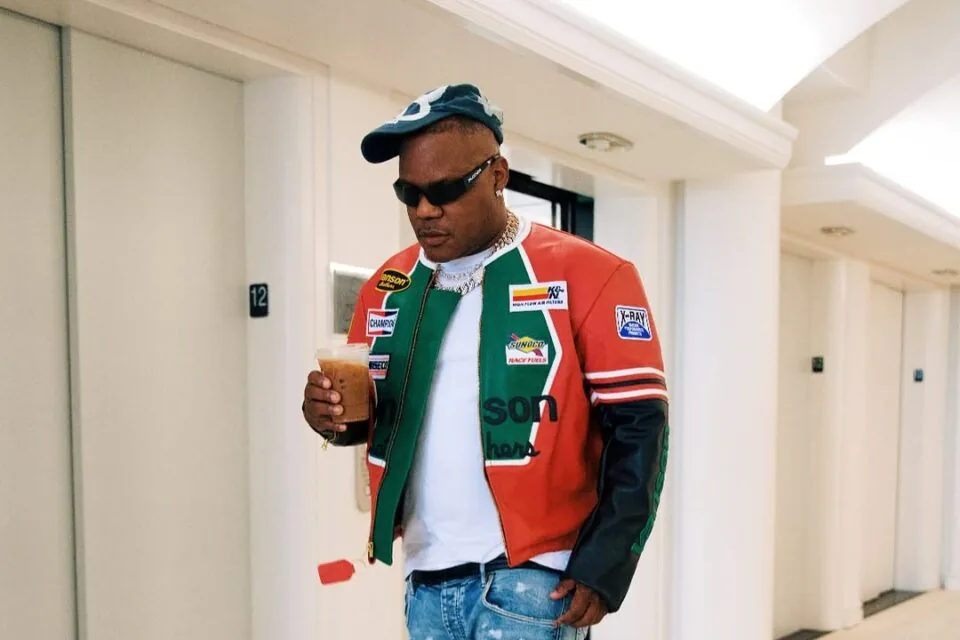

Instagram/@joclive
Yung Joc, the rapper and media personality, has gone straight to the point and shared his feelings through the internet, expressing his doubts about the public’s honesty when people are still getting hurt in neighborhoods. The video of his post where he shows a community moving speech is just a question: ‘Are we serious about changing?’
Advertisement
In the clip, a person called Ray Reed-Jegrebs, who is a spiritual support, talks to the crowd. He is sure that death is not the end but the beginning of life and he also says that ‘We are not here to do the usual mourning,’ he very emphatically states. ‘We are here to celebrate with you and rejoice in life.’ It is a declaration about how the cities are getting too much violence news and children are mourning. Yung Joc backed this message with his own voice, and he urged his listeners to write ‘#change’ if they think that the difference can be made.
Right away, the post garnered reactions from the public, the majority of which were in the form of prayers and condolences, as if the viewers were sharing their personal loss. However, some answers managed to get straight to the core of Joc’s questioning, thus revealing a great variety of feelings within the community.
One person gave a very critical opinion on the behavior of the current generation, “Yes, we need to go back to the time when we wouldn’t even record someone’s funeral and then put it on social media.” A slight argument was then initiated by this comment, as another person elaborated the situation: “You are missing the main point. This wasn’t even a funeral. Did you see the ending?” This kind of interaction highlights the conflict of social media being the same platform that is criticized when it comes to forming criticism through social media of the use of social media in sensitive situations.
Another user shared a more negative and probably exhausted perspective. “Nope, you all don’t want change, you all are not even trying to listen to 21 Savage,” the post read, referencing the rapper known for his candid remarks about street life and systemic issues. This sentiment suggests that the public receiving these messages is not only blind to the harsh realities but also to the very voices of the community that give them.
One more comment referred to the need for effective organization, and it carried a direct mention of Yung Joc: “MAN WE NEED TO DO THIS IN GA.” The call for local action behind this online activity reinforces the point that the digital atmosphere needs to be transformed into the actual, grassroots happenings like the one depicted in the video—i.e., switching from digital approval to physical presence.
Yung Joc, whose birth name is Jasiel Robinson, has been a significant figure in the hip-hop scene since 2006 when he released his hit song ‘It’s Goin’ Down.’ His career has recently expanded to include that of a media figure and commentator, who constantly tackles the issues affecting the African American community in the U.S. This post is a part of his that, using his platform to highlight community-based solutions and self-introspection, much like the humorous spirit seen in a recent hilarious skit.
The varying reactions he received to his innocent question—from prayer hands to cynicism to action calls—are indeed very intricate. They represent a community that is still fighting and grieving and at the same time is exasperated with unproductive gestures and is still searching for the proper way to have good improvements. The orator in the video believes that the gathering is ‘part of our solutions,’ thus, calls for proactive unity the cure to the despair.
Advertisement
To sum up, Yung Joc’s post is more of a mirror than a solution. It inquires whether the whole society possesses the willpower to cease the complaining and to embark on the harder task of creating and celebrating life, as the speaker puts it. The mixed response in the comments section is a clear indication that the desire for change is there, but arriving at the point of agreeing on how to do it and on the genuineness of the effort is still a work in progress. The conversation, however, is indisputably already in progress.